Soaked carpet and floors in Suwanee and nearby
Water Extraction and Drying in Suwanee, GA
Water extraction and drying in Suwanee, GA starts when carpet squelches, a hard floor holds a sheet of water or a wall is wicking a spill upward.
Call (678) 572-1407 and describe which room is wet and what the water touched; the contractor can arrange a visit.
What you can see
- Carpet that squishes under a sock after a spill, an overflow or a leak
- A sheet of standing water on tile, vinyl or laminate that has not drained
- Baseboards that look darker than the wall above them, or have begun to swell
- A damp patch that is wider each time you check it
- A flat, wet-basement smell in a room where no window has been open
Around Suwanee
Gwinnett County Water Resources says its crews cannot work on private property. Repairs on the customer's side of the meter fall to the owner, which puts a failed line inside the house on the homeowner's list.
Johns Creek's new-resident page lists Fulton County for water. Fulton County's emergency repairs page prints 770-640-3040 for drinking water in North Fulton, and the street address tells which county's lines a house uses.
On site, a visit goes like this
Call (678) 572-1407 and describe the room and what the water touched; the contractor can arrange a visit.
At the house, a moisture meter goes along the floor and the lower wall, and the readings mark where the wet area ends.
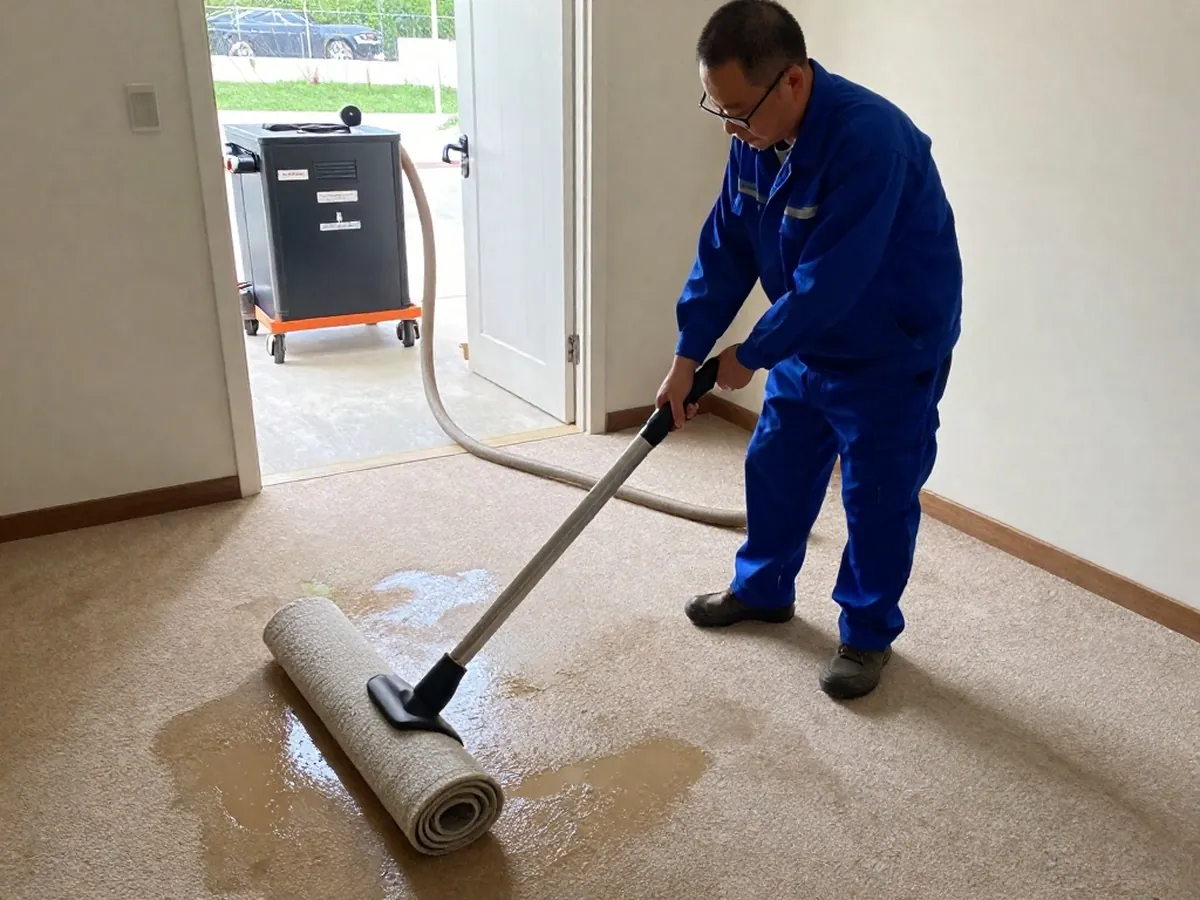
Standing water comes off with pumps or extractor wands, and the contractor says which carpet, pad or flooring can stay and which has to go.
Fans and dehumidifiers go in where the readings point, with a plain explanation of what each machine is doing.
Furniture, boxes and contents in the wet area are lifted or moved, and ruined items are noted for the insurance record.
Before leaving, the contractor writes down what was found and what comes next, a page you can hand to an insurer or a landlord.
When safety comes before cleanup
- Water around an outlet, a power strip or a plugged-in appliance: stay out of the water and leave the room. Call 911 if anyone has been shocked.
- A ceiling that droops or drips where the water came from: get everyone out from under it, and dial 911 if it begins to come down.
- A gas smell, or a gas water heater or furnace standing in water: walk outdoors and tell the gas company or 911 from a safe distance.
- A shop vacuum or pump that would run on a cord through the wet area: do not plug anything in until an electrician has confirmed the power is safe.
What changes the size of a job
Why one soaked room is a bigger job than the next
The number of square feet that read wet matters more than the size of the puddle. A tap-water spill caught while carpet is only damp is a smaller job than the same spill that sat under a sofa overnight. Carpet over a pad has more to deal with than a bare floor. Whether the source has stopped, how many rooms the water reached and whether the walls took it up all feed the contractor's list. No figure is quoted here; one comes after someone has seen the room.
Looks you can take from dry ground
Stay with checks you can make from dry ground, in daylight, away from anything electrical that has been wet. Wet wiring and soaked drywall are professional work.
- Press a dry paper towel against the carpet along a wall, then against a spot mid-room. A towel that darkens in either place shows how far the water has traveled.
- Look under furniture legs for rust marks or lifted laminate edges. Water hides there longest.
- Open the closet or cabinet on the far side of a wet wall and lay the back of your hand on the back panel.
- Jot down the day you first noticed the water, then take wide photos of the room and close ones of the damage before anything is moved.
Moves that make it worse
Habits that leave the floor wetter
Plugging a household vacuum in while standing in water, which the CDC's guidance for flooded homes warns against with any electric tool. Walking the wet carpet in street shoes and grinding grit into the pad. Shutting the doors and pointing one box fan at the wall, which moves damp air around without moving it out. Leaving wet rugs and cardboard where they landed.
Georgia seasons and this job
March is the wettest month on the Suwanee rain gauge
The 1991-2020 normals from NOAA's Suwanee 1.5 W gauge total about 54.5 inches across the year, with 5.07 inches in March at the top and 3.82 in October at the bottom. Rain is spread across the calendar instead of bunched into one season, so a leaking roof or window can soak a floor in any month.
Have this at hand
Jot these down before the call
- Which rooms are wet, and the flooring in each one
- The source of the water, and whether it has been stopped
- When it started, as closely as you can say
- A few photos, taken before anything is lifted
- The name of your insurance company, if you have one
Have the street address, the room it started in and what you can see ready, then call (678) 572-1407. If you rent, contact the landlord first. Calls cover Suwanee, Sugar Hill and Johns Creek.
Before you hire anyone
When drying turns into rebuilding
Suwanee's building page lists minor repair, cabinetry and painting as work with no permit, and repairing a structure as work that has one. Where a job lands between the two depends on the city. The hiring checklist lists each city's office and phone.
Where this comes from
- CDC, Reentering your flooded home
- U.S. EPA, Flooded homes: doing it yourself
- U.S. EPA, Flood cleanup: protect indoor air and your health
- University of Georgia Extension, Removing mold in your home (C1047-2)
- NDSU Extension, Cleaning and repairing flood-damaged walls, ceilings and floors
- Gwinnett County Water Resources, Customer care FAQs
- City of Johns Creek, New residents
- Fulton County, Water services: emergency repairs
Checked 1 Nov 2026